
Overview
The Tactical High Energy Laser (THEL) Demonstrator was a joint US-Israeli directed-energy weapon programme that developed and tested a ground-based chemical laser system for defence against short-range rockets, artillery shells, and mortar rounds. THEL was one of the first directed-energy weapon systems to demonstrate successful engagement of airborne targets in a realistic tactical scenario, and its tests in 2000 and 2001 — in which it shot down multiple Katyusha rockets — were widely reported as a milestone in directed-energy weapon development.
THEL was a demonstrator programme, not a production weapon system. The system was large, complex, and logistically demanding, requiring chemical fuel for the laser and extensive support infrastructure. However, the programme validated the technical feasibility of laser air defence and laid the groundwork for subsequent solid-state laser programmes that addressed THEL's logistical limitations.
Design and Technology
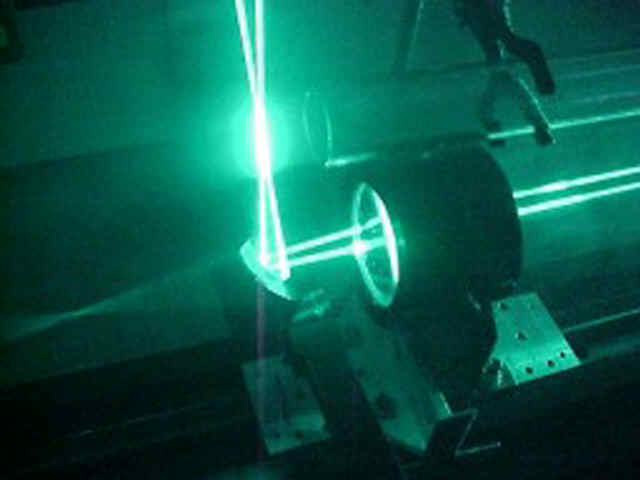
THEL was powered by a deuterium fluoride (DF) chemical laser. In a DF laser, a chemical reaction between deuterium and fluorine produces excited deuterium fluoride molecules that emit infrared radiation at a wavelength of approximately 3.8 microns. The DF laser was chosen for THEL because it produces high beam power in the infrared spectrum and can operate at relatively high efficiency.
The THEL system consisted of several major subsystems:
- Laser device: The DF chemical laser, capable of producing several hundred kilowatts of continuous-wave infrared power.
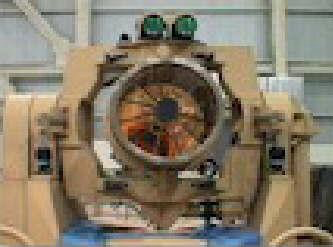
- Beam director: A telescope-like optical system that focused the laser beam and directed it toward the target, incorporating adaptive optics for atmospheric compensation.
- Tracker: A radar and optical tracking system that detected incoming targets and provided pointing information to the beam director.
- Command and control: A computer system that managed target engagement, prioritising targets and directing the laser beam.
- Chemical fuel system: Storage and handling for the deuterium and fluorine reactants, along with toxic exhaust management.
The entire THEL system was housed in a complex of shipping-container-sized modules, making it transportable but not truly mobile. The system required substantial setup time and logistical support.
Development History
THEL originated in a 1995 agreement between the United States and Israel to develop a laser defence system against the Katyusha rockets being fired by Hezbollah into northern Israel from southern Lebanon. The Katyusha threat was a significant concern for Israel, and conventional air defence systems (such as Patriot) were not effective against the short flight times and small radar cross-sections of Katyusha rockets.
The US Army Space and Strategic Defense Command (SSDC) was designated as the executive agent for the programme, with TRW (later Northrop Grumman) as the prime contractor. The Israeli Ministry of Defense participated in the programme and provided target rockets and test support.
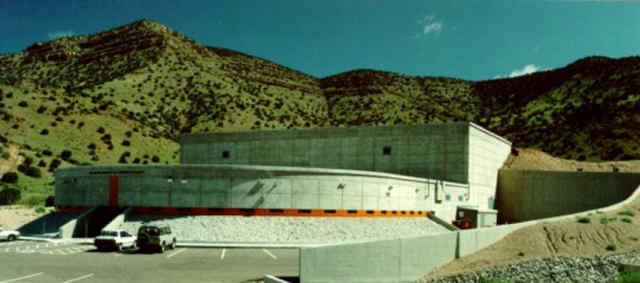
The THEL Demonstrator was assembled at the High Energy Laser Systems Test Facility (HELSTF) at White Sands Missile Range, New Mexico, which already housed the Mid-Infrared Advanced Chemical Laser (MIRACL) — the largest chemical laser in the United States. THEL used a separate, purpose-built DF laser rather than MIRACL itself.
Testing and Demonstrations
THEL testing began at White Sands Missile Range in 2000. The programme's most notable achievements were:
- August 2000: THEL successfully shot down a Katyusha rocket in flight — the first successful laser engagement of a rocket in a tactical scenario.
- August 2000: THEL shot down two Katyusha rockets simultaneously.
- 2001: THEL successfully engaged multiple artillery shells in flight, demonstrating the system's ability to track and destroy faster, smaller targets than rockets.
These demonstrations were widely reported as a breakthrough in directed-energy weapon technology. However, the demonstrations also revealed the system's limitations: THEL was large, complex, and required extensive logistical support. The chemical laser consumed expensive and hazardous fuels, and the system's effective range was limited to a few kilometres.
Mobile THEL (MTHEL) Variant
Following the success of the THEL Demonstrator, the US and Israel initiated a programme to develop a Mobile Tactical High Energy Laser (MTHEL) — a more compact, transportable version of THEL that could be deployed in the field. The MTHEL programme aimed to reduce the system's size and logistical footprint while maintaining or improving its performance.
The MTHEL programme encountered significant technical and budgetary challenges. The system remained large and complex despite efforts to reduce its size, and the chemical laser's logistical requirements (fuel storage, exhaust handling, maintenance) were incompatible with true tactical mobility. The MTHEL programme was cancelled in 2004.
The cancellation of MTHEL reflected a broader shift in US directed-energy policy away from chemical lasers (which were logistically problematic) toward solid-state lasers (which use electrical power and can be more easily integrated into tactical platforms). Subsequent programmes, such as the Solid State Laser Testbed and the High Energy Laser Mobile Demonstrator, pursued solid-state laser technology for tactical applications.
Specifications
| Parameter | Value | |---|---| | Role | Tactical air defence laser | | Type | Ground-based demonstrator | | Laser type | Deuterium fluoride (DF) chemical laser | | Wavelength | ~3.8 microns (infrared) | | Beam power | Several hundred kilowatts (classified) | | Effective range | Several kilometres (classified) | | Targets | Rockets, artillery shells, mortar rounds | | Prime contractor | TRW (later Northrop Grumman) | | Test site | HELSTF, White Sands Missile Range, NM | | First successful engagement | August 2000 | | Status | Demonstrator programme; cancelled (MTHEL variant) |
Declassification and Provenance
THEL was a publicly acknowledged programme. Its existence, test results, and general capabilities were reported in open sources, including Department of Defense press releases, defence trade publications, and mainstream media. However, specific technical details such as the exact beam power, effective range, and certain design parameters remain classified.
The gallery images associated with this technology are from a legacy compilation whose CIA-P2 catalog numbers are legacy identifiers and do not establish CIA authorship, declassification, or provenance. The images appear to show the THEL system or related directed-energy hardware, but the precise dates and programme attribution of each image cannot be verified from the images alone.
References
- Northrop Grumman. "Tactical High Energy Laser (THEL)." Company press releases and product information.
- US Army Space and Strategic Defense Command. "THEL Demonstrator Test Results." Public affairs releases.
- Defense Update. "THEL/MTHEL." International defense review.
- Hecht, Jeff. "Tactical Laser Shoots Down Rockets." Laser Focus World.
- Sprangle, Phillip et al. "High-Power Lasers for Directed-Energy Applications." Naval Research Laboratory.