
Overview
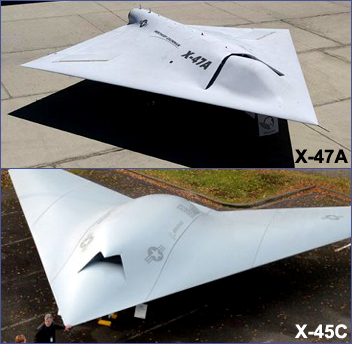
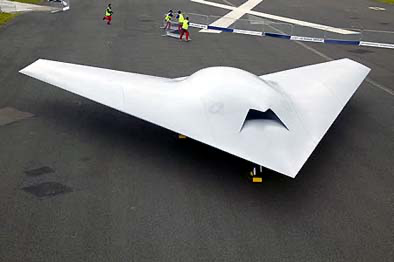
This entry covers gallery images that appear to show concept models of tailless fighter aircraft — designs that eliminate the vertical tail and, in some cases, the horizontal tail as well, relying on advanced flight control systems for stability and control. The images are concept models, not photographs of operational aircraft, and their specific programme attribution cannot be verified from the images alone.
Tailless fighter concepts have been studied by several aircraft manufacturers since the 1990s, driven by the potential for reduced radar cross-section (the vertical tail is a significant radar reflector), reduced drag, and reduced weight. However, the tailless configuration presents significant challenges in stability, control, and manoeuvrability that have limited its application to operational fighters.
Tailless Aircraft Design Principles
A tailless aircraft is one that lacks a vertical tail (and sometimes horizontal tail surfaces as well). The tailless configuration offers several advantages:
- Reduced radar cross-section: The vertical tail is one of the largest radar reflectors on a conventional fighter, due to its large surface area and 90-degree angle to the fuselage. Eliminating the vertical tail significantly reduces radar cross-section.
- Reduced drag: The vertical tail produces drag (both parasitic and induced). Eliminating it reduces total drag and improves fuel efficiency.
- Reduced weight: The vertical tail and its associated structure add weight. Eliminating it reduces airframe weight.
- Reduced signature: The vertical tail is also a significant infrared reflector and visual signature. Eliminating it reduces all-aspect signature.
However, the tailless configuration also presents significant challenges:
- Directional stability: A conventional vertical tail provides directional stability (weathervane stability), keeping the aircraft pointed into the relative wind. Without a vertical tail, the aircraft has no natural directional stability and must rely on active control (split rudders, drag rudders, or differential thrust) to maintain directional control.
- Yaw control: Without a vertical tail rudder, yaw control must be provided by other means, such as split rudders (split trailing-edge surfaces that open to create drag on one side), drag rudders, or differential thrust.
- Spin recovery: Without a vertical tail, spin recovery is more difficult, as there is no rudder to stop the yawing motion of a spin.
- High-angle-of-attack control: At high angles of attack, the vertical tail may be shielded by the fuselage and ineffective. A tailless aircraft must rely on other control effectors for high-AOA yaw control.
Boeing Phantom Works and Concept Development
Boeing Phantom Works (formerly McDonnell Douglas Phantom Works) is Boeing's advanced research and development division, responsible for developing and demonstrating advanced aircraft technologies. Phantom Works has studied numerous tailless fighter concepts, including:
- X-32 Joint Strike Fighter: Boeing's entry in the Joint Strike Fighter competition was a tailless delta-wing design (in some configurations). The X-32 lost to the Lockheed Martin X-35 (F-35).
- X-45 UCAV: The X-45 UCAV demonstrator was a tailless flying-wing design, derived in part from tailless fighter concept studies.
- Naval tailless fighter concepts: Boeing has studied tailless fighter concepts for naval applications, including concepts for carrier-based tailless fighters.
- Sixth-generation fighter concepts: Boeing has released concept artwork for sixth-generation fighter designs that incorporate tailless configurations, including the F/A-XX concept for the US Navy.
The X-32 Program Context
The Boeing X-32 was Boeing's entry in the Joint Strike Fighter (JSF) competition, which sought to develop a multi-role fighter for the US Air Force, Navy, and Marine Corps, as well as international allies. The X-32 was a delta-wing design with a prominent chin intake, and some configurations were tailless or near-tailless.
The X-32 competed against the Lockheed Martin X-35 (which became the F-35 Lightning II). The X-32 lost the JSF competition in 2001, with the X-35 selected for production. The X-32's loss was attributed to several factors, including the X-35's superior Short Takeoff Vertical Landing (STOVL) performance and the X-32's less conventional configuration.
The X-32 programme provided Boeing with valuable experience in tailless fighter design, which has been applied to subsequent concept studies.
Unmanned Tailless Concepts
In addition to manned tailless fighter concepts, Boeing has studied unmanned tailless aircraft for surveillance and strike missions. The X-45 UCAV was a tailless flying-wing design that demonstrated the feasibility of autonomous unmanned combat aircraft. The X-45 programme was cancelled in 2006, but the technology has been applied to subsequent programmes, including the MQ-25 Stingray carrier-based refuelling tanker.
Boeing has also studied tailless unmanned combat aircraft concepts for sixth-generation fighter programmes, including the Air Force's Next Generation Air Dominance (NGAD) programme and the Navy's F/A-XX programme.
Declassification and Provenance
The gallery images are concept models from a legacy compilation whose CIA-P2 catalog numbers are legacy identifiers and do not establish CIA authorship, declassification, or provenance. The images depict design concepts, not operational hardware, and should not be interpreted as evidence that any tailless fighter was built or deployed.
The images may originate from open-source Boeing concept studies, defence exhibition displays, or popular-science illustrations. Without verified provenance, the images should be treated as historical concept art of unknown origin.
References
- Boeing. "Phantom Works: Advanced Concepts." Company publications.
- Boeing. "X-32 Joint Strike Fighter." Historical product information.
- Sweetman, Bill. "Sixth-Generation Fighter Concepts." Aviation Week & Space Technology.
- Congressional Research Service. "Next Generation Air Dominance (NGAD) Programme." CRS reports.